Shungite Glossary: 38 Terms, Defined
Share
from The Shungite Medium by Gary Fong · published here complete
- Allotrope
- A structurally distinct form of a chemical element. Carbon has many allotropes, graphite (pencil lead), diamond, graphene, charcoal, and fullerene. Each allotrope has the same element (carbon) but different atomic arrangements, which give it dramatically different properties.
- Antioxidant
- A molecule that safely accepts or neutralizes excess unstable electrons (free radicals) before they can damage cells, DNA, or proteins. Vitamin C, vitamin E, and glutathione are familiar dietary antioxidants. The fullerene cage in shungite is one of the strongest known electron-accepting structures.
- Apoptosis
- Programmed cell death. A normal biological process the body uses to clear damaged or unwanted cells. Excessive oxidative stress can trigger apoptosis in healthy cells, contributing to tissue degeneration and aging.
- Bioelectricity
- The electrical activity that runs every cell in the body. Heartbeats, nerve signals, muscle contractions, and thoughts are all electrical events. Bioelectricity sits underneath the chemistry, chemistry runs on electrons.
- BioInitiative Report
- A 2007/2012/2022 review of EMF and health research compiled by an international group of scientists and public health experts. Recommends an exposure guideline of 0.1 mW/m² (microwatts per square meter) for radiofrequency radiation, orders of magnitude below most national safety standards.
- Buckminsterfullerene
- Another name for C60, the 60-carbon fullerene molecule. Named for architect R. Buckminster Fuller, whose geodesic domes share the same geometric structure. Often shortened to 'buckyball.'
- C60
- The most common fullerene, made of exactly 60 carbon atoms arranged in a hollow soccer-ball shape (12 pentagons and 20 hexagons). Discovered in 1985 by Kroto, Curl, and Smalley, who won the 1996 Nobel Prize in Chemistry for the discovery.
- Carbon allotrope
- See Allotrope. Carbon's allotropes are unusually varied because of carbon's ability to form four bonds in different geometric configurations.
- Conchoidal fracture
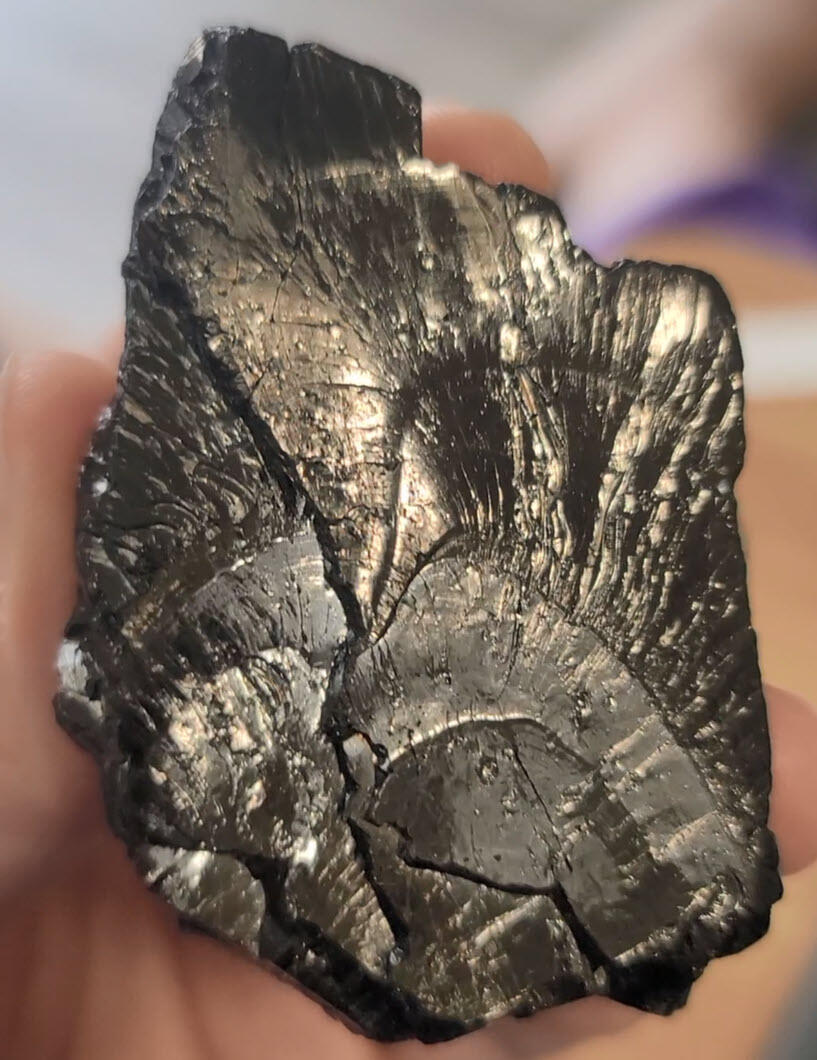
- A curved, shell-like break pattern that appears when extremely homogeneous materials shatter, glass, obsidian, high-purity carbon. Real Elite Type 1 (DMG) shungite shows conchoidal fracture; impure or fake material does not.
- Concert pitch
- The standardized frequency used to tune musical instruments. International standard since 1953 (ISO) is A = 440 hertz. Historically pitch varied widely across countries and eras.
- Conductive
- A material that allows electrons to flow freely. Metals, gold, silver, real shungite are conductive. Plastic, resin, glass, fake shungite are not.
- Dielectric
- A material that does not conduct electricity but can store electrical energy. Real shungite is unusual in combining conductive carbon with dielectric mineral inclusions in a single composite, part of why it shields EMF effectively.
- DMG (Deep Mine Grade)
- Verified Shungite's designation for the rarest grade of Elite Type 1 shungite, pulled by hand from deep, narrow seams in Karelia. Approximately 97% carbon. Visually identified by its conchoidal (wave-like) fracture pattern. Roughly 1 stone in 100,000 mined.
- Eddy current
- A circular flow of electricity induced in a conductor when it encounters a changing magnetic or electromagnetic field. In real shungite, eddy currents form when the stone meets EMF radiation, the mechanism by which the energy is dissipated as low-grade heat rather than passing through to biological tissue.
- EHS (Electromagnetic Hypersensitivity)
- A condition in which an individual experiences physical symptoms, headache, brain fog, tinnitus, fatigue, anxiety, sleep disruption, in response to ambient electromagnetic fields. Recognized as a medical condition in several European countries. Not currently a formal diagnosis in U.S. clinical practice.
- Electron
- A negatively charged subatomic particle. Every chemical reaction and every electrical signal in biology involves the movement or exchange of electrons.
- EMF (Electromagnetic Field)
- The field of energy generated by any electric current or radiating device. Includes radio waves, microwaves, Wi-Fi, cellular signals (4G, 5G), power lines, and the natural EMF of Earth itself. Different frequencies have different biological effects.
- Fullerene
- A class of carbon molecules in the form of hollow cages, spheres, ellipsoids, or tubes. The most common fullerene is C60. Fullerenes are extraordinarily stable and can safely absorb multiple electrons, which is why they function as powerful antioxidants. Found in nature in significant concentration only in shungite from Karelia, Russia.
- Hexagon
- A six-sided geometric shape. In the C60 fullerene, twenty hexagons make up most of the cage's surface. The hexagonal carbon arrangement is also the structural unit of graphene and graphite.
- Karelia
- A region of northwestern Russia, bordering Finland, that contains the world's only commercially mined deposit of fullerene-rich shungite. Centered around Lake Onega.
- Lake Onega
- A large freshwater lake in Karelia, Russia. Sits in a basin one leading theory attributes to an ancient meteor impact. The shungite deposit lies in the bedrock surrounding the lake.
- Mitochondria
- The energy-producing organelles inside every cell. They convert nutrients into ATP, the cell's energy currency. The process is fundamentally electron-based; when mitochondria leak electrons, oxidative stress results.
- Multimeter
- A handheld electronic instrument that measures voltage, current, and resistance. Used in this book to test the conductivity of shungite, real shungite drops the resistance reading rapidly toward zero; fake stones do not.
- Neurasthenia
- A historical medical diagnosis for nervous-system exhaustion accompanied by fatigue, headache, anxiety, and sensitivity to environmental stimuli. Common among 19th-century telegraph operators exposed to high-wattage electrical equipment. The condition is still recognized in many countries; it is no longer a formal U.S. diagnosis.
- Nobel Prize in Chemistry, 1996
- Awarded to Robert F. Curl, Harold W. Kroto, and Richard E. Smalley for their 1985 discovery of fullerenes.
- ORP (Oxidation-Reduction Potential)
- A measurement, in millivolts (mV), of a solution's tendency to gain or lose electrons. Positive ORP indicates a solution that tends to oxidize (steal electrons from) other substances. Negative ORP indicates antioxidant capacity. Untreated water typically reads positive; shungite-infused water shifts toward lower (more antioxidant) values.
- Oxidative stress
- Cellular damage caused by an excess of reactive oxygen species (free radicals) that the body's antioxidant defenses cannot neutralize. Implicated in aging, neurodegeneration, cardiovascular disease, and chronic illness.
- Pentagon
- A five-sided geometric shape. In the C60 fullerene, twelve pentagons are arranged around the cage. The pentagons are believed to be the structural sites that accept incoming electrons.
- Piezoelectric
- The property of certain materials to generate an electrical charge in response to mechanical stress (or to deform in response to an applied electric field). Quartz is the classic piezoelectric material. Shungite displays piezoelectric behavior, which is part of its interaction with the body's bioelectric field.
- Porphyrin
- A ring-shaped molecule containing nitrogen, found in hemoglobin, chlorophyll, and many enzymes. Some research suggests porphyrins respond to electromagnetic radiation and may underlie the physiological response in EHS individuals.
- ROS (Reactive Oxygen Species)
- Unstable, electron-hungry oxygen-containing molecules, including free radicals, produced as byproducts of normal metabolism. In small amounts they serve signaling functions; in excess they cause oxidative stress.
- Shungite
- A black, carbon-rich rock found in commercial quantity only in Karelia, Russia. Approximately 2 billion years old. Notable for containing naturally occurring fullerenes, the only known geological deposit on Earth where fullerene is present in significant concentration.
- Solfeggio
- A medieval system of musical notation. The 'Solfeggio frequencies' (396 Hz, 417 Hz, 528 Hz, 639 Hz, 741 Hz, 852 Hz, 963 Hz) popularized in the 1970s for use in alternative healing communities are a modern numerological construct. The frequencies themselves are not validated by peer-reviewed research as having specific healing or chakra-activating effects.
- Telomere
- A protective DNA sequence at the end of each chromosome. Telomeres shorten with each cell division; when they become too short, the cell stops dividing. Once thought to be the master clock of aging, current research suggests they are only one of several aging mechanisms.
- Type 1 shungite
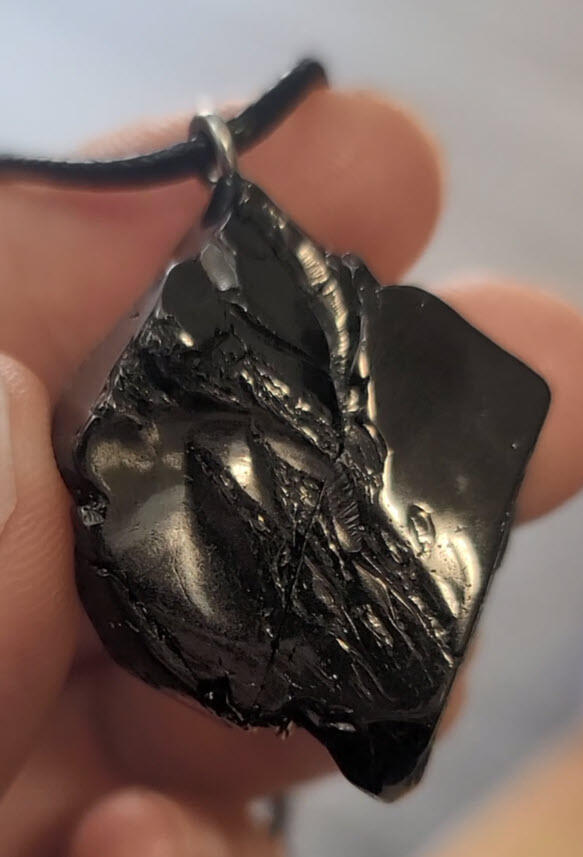
- Also called Elite or Noble shungite. The highest-carbon grade of shungite, approximately 97% carbon. Visually identified by a smooth, glassy surface. Found only in deep, narrow seams. Cannot be carved or shaped because it is too brittle.
- Type 2 shungite
- Approximately 75% fullerene. More physically durable than Type 1, with visible quartz veining (white streaks) and pyrite specks (gold flecks). Can be shaped into beads, bracelets, plates, and other forms. Recovered from above-ground deposits.
- Type 3 shungite
- Lower-grade shungite with significantly reduced fullerene content. Used in industrial applications and as a building material. Not considered to provide meaningful EMF or antioxidant benefit.
- Vasodilator
- A class of drug that widens blood vessels, lowering blood pressure. Common examples include ACE inhibitors and calcium channel blockers. Critiqued in this book for addressing the symptom (high blood pressure) rather than the underlying physiological cause.
From The Shungite Medium: The Groundbreaking Exposé of History's Most Miraculous Stone by Gary Fong. LSH Publishing, first edition 2026. Contents.